St Dunstan’s church is steeped in history. This is reflected in the many memorials which adorn its walls bearing witness to the characters who have lived in or been associated with the village in centuries past. But there are other famous folk who have passed through whose names are not inscribed in the church’s monuments. It is likely, for example, that at least seven monarchs have worshipped within the walls of the church, their prayers ascending in just the same way as those of today’s congregation.
Among the most notable figures from the church’s past are the four Tudor monarchs known to have spent considerable time at the adjacent property, Hunsdon House – Henry VIII and his three children, Edward VI, Mary I and Elizabeth I. Hunsdon was Henry’s favourite hunting lodge and he spent a lot of time here. Our event concerns something that happened in June 1528, in the middle of Henry’s reign. There is an official account, of course, but readers can be excused for wondering whether there may be more to the story than first meets the eye.
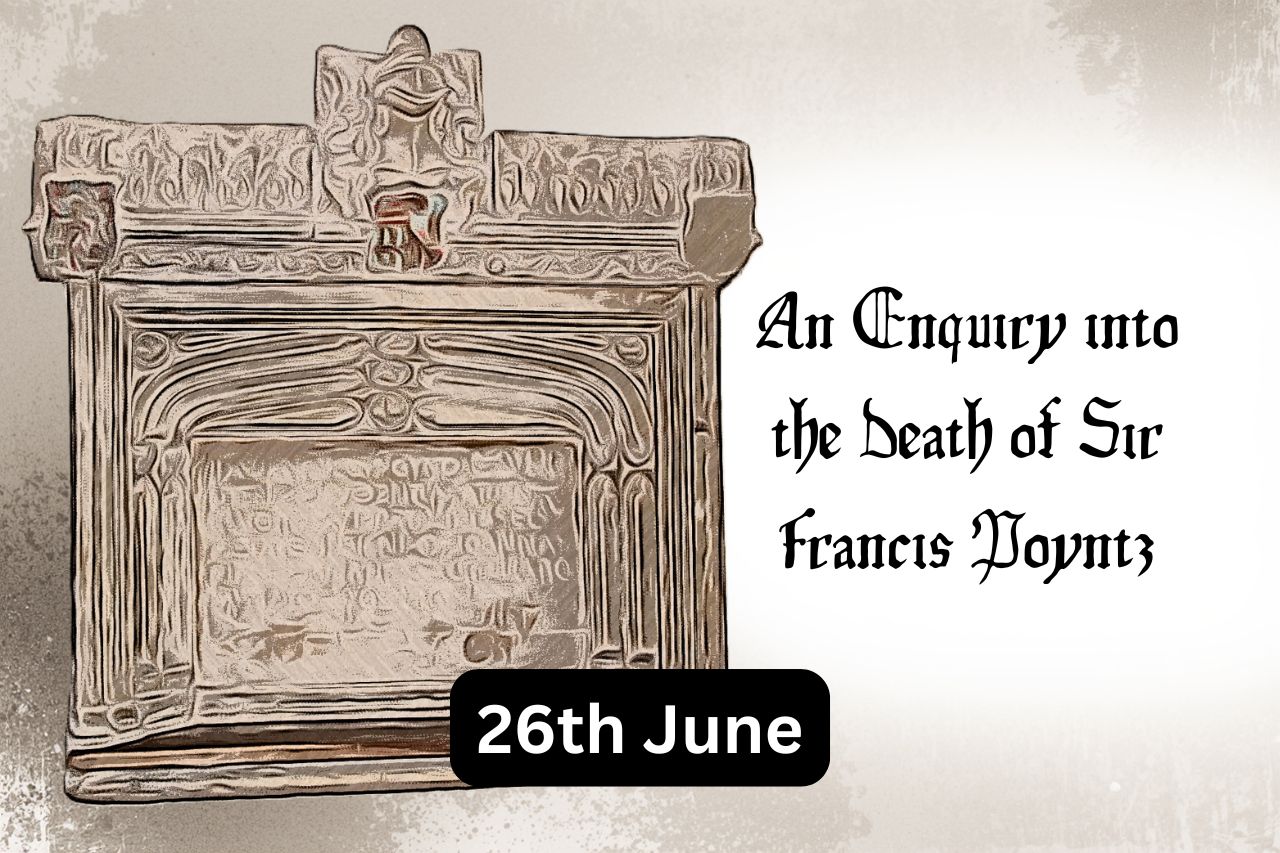
It concerns a man who is remembered in one of the memorials in the church – Sir Francis Poyntz. Unlike some of the later and more flamboyant memorials in the church which narrate at length the fine character of the deceased persons in whose memory they have been erected, Francis’ memorial is very brief. Erected by his widow, Joan, it gives away very little about the man she loved, saying simply that he was, “conspicuous for learning, prudence, friends, the favour of his sovereign, and piety.”
So a friend of the king, then. That’s no small thing. Other sources tell us that Francis was a courtier who had been sent by Henry VIII to the Holy Roman Emperor (Charles V) on a diplomatic mission – helping to negotiate peace between Charles and Francis I of France. He was originally from Gloucestershire and as far as we know, appears never to have lived in Hunsdon. And yet his memorial is here in the church – and right in the sanctuary no less, perhaps intended for use for the Easter Sepulchre. So what was his connection with our village?
According to the official narrative, Francis was one of seven members of Henry’s royal party who had fled to Hunsdon from London to avoid the mysterious and deadly “Sweating Sickness” and sadly, he succumbed to the disease. He died on 26th June 1528 – 498 years ago.
Seven people fled the courts of the King. Only one died. Knowing the mortality rate for the disease, we should probably regard this as good news – although not for Francis. It would be reasonable to assume he was simply more susceptible than the others to the sickness. But he was not an old man; 42-43 maybe. Could there be other, more sinister explanations for his untimely demise?
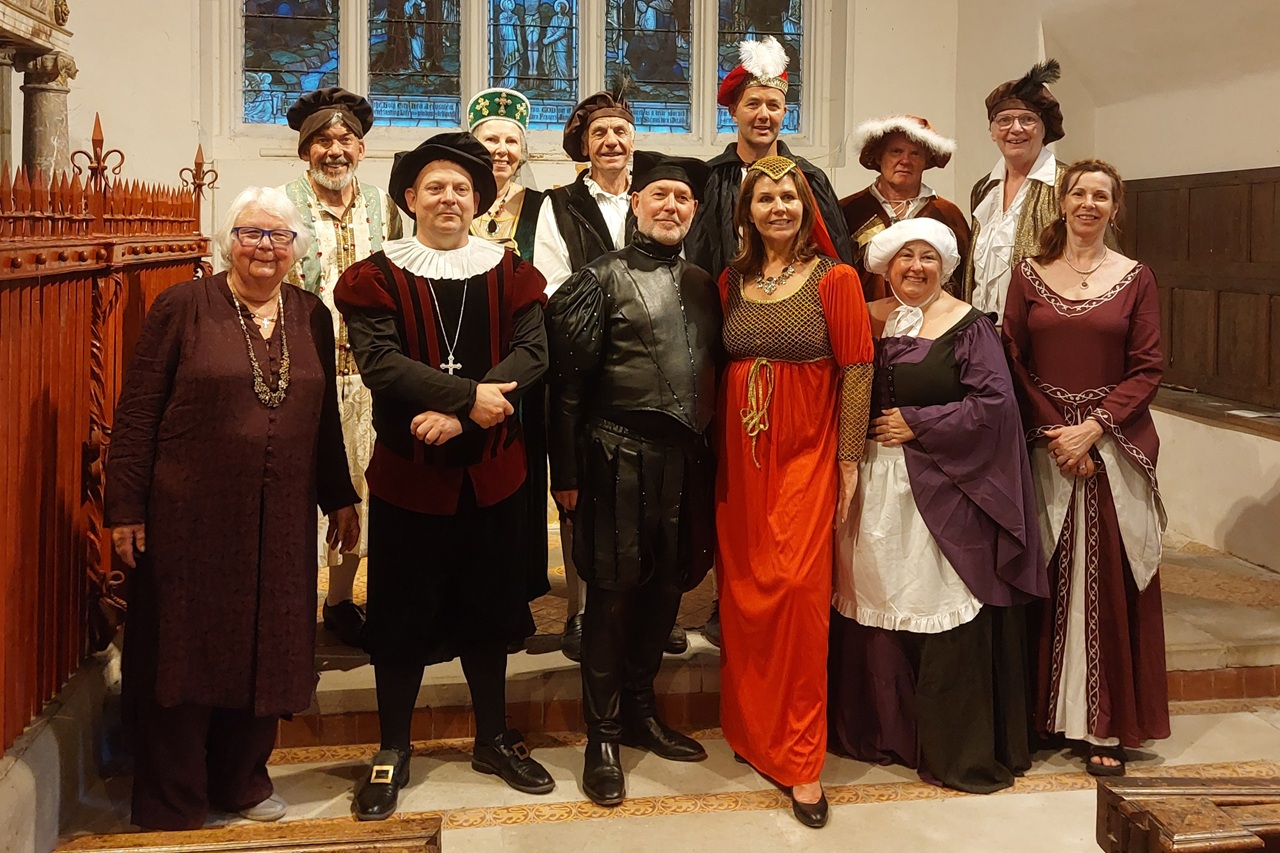
Join us in the church to investigate. With the help of Quintessence, we will interview some of the people who were there at the time and come to our own conclusion.
A selection of Tudor snacks and drinks will be served, and there will be an opportunity to explore the church, including the memorial to the man at the centre of this Tudor Mystery.
Friday 26th June, 7:30pm
Tickets £7.50